
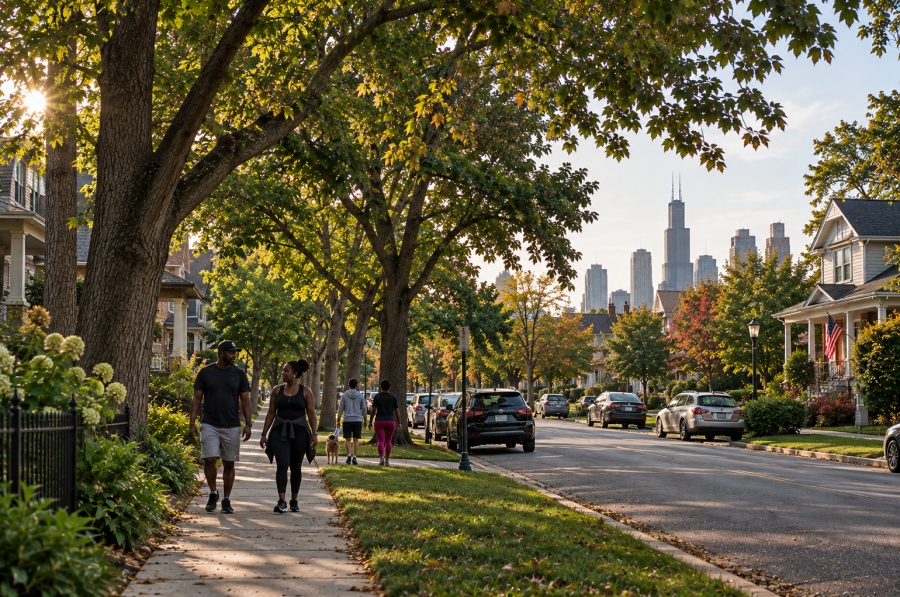
Trees have a wide variety of benefits that they offer, both to humans and to our natural environment. For example, trees improve our mental health, reduce energy use, reduce water and air pollution, protect us from the urban heat island effect, and create social and economic opportunities, to name a few. What all these benefits have in common is that they all contribute to minimizing the effects of climate change on our environment.
The energy that urban trees conserve is one of the most important factors in reducing our impact on the environment. Strategically placed trees can provide shade to buildings and alter the wind patterns, keeping the home cooler in the summer and warmer in the winter. A single tree in an urban area sequesters 4.5-11 kg of carbon, but is responsible for avoiding the combustion of 18 kg of carbon annually, accounting for reduced energy use in addition to the carbon sequestration. This makes one urban tree equal to the impact of 3-5 trees in a forest. With such a prominent impact on our environment, the increased planting and maintenance of urban trees is something that will reduce our impact. Although this impact will not make an extreme difference on a global scale, every action makes a difference.
In addition, the reduced use of energy is not the only benefit trees have as we try to mitigate climate change. Trees have an effect on both air pollution and water pollution. In the Chesapeake Bay Watershed, runoff is a growing source of pollution. As more land continues to be developed, there is more surface area where rainwater cannot be absorbed, and instead continues to collect pollutants and carry them into rivers and streams. This is where trees come into play. In urban areas where there is not a large amount of trees or natural areas, increasing the presence of trees has a large effect on reducing runoff. Trees absorb water through their roots and collect water on their leaves, which is returned to the atmosphere through a process called evapotranspiration. Having a tree in your yard or out by the street can make a big difference when it comes to reducing pollution in the beloved Chesapeake Bay.
Trees also play a significant role in reducing air pollution. They intercept particulate matter and absorb airborne pollutants, leaving the air cleaner than it was. The Conservation Law Foundation estimates that 45 million tons of carbon are absorbed by urban forests in the U.S., and that this number could more than double if more trees were strategically planted in urban areas.
Trees are constantly benefiting the areas around them, and as they age and grow, their benefits only continue to increase. GHEP wants to help contribute to reducing the effects of climate change on our communities in Prince George’s County. Through our Family Tree Adoption Program, you can plant at least three free trees in your yard, which will provide endless benefits to yourself, your community, and the environment.
Sources:
https://www.sciencedirect.com/science/article/pii/S0269749101002640?via%3Dihub
https://www.cbf.org/issues/polluted-runoff/index.html
https://www.clf.org/blog/urban-trees-benefit-our-climate-and-health/