
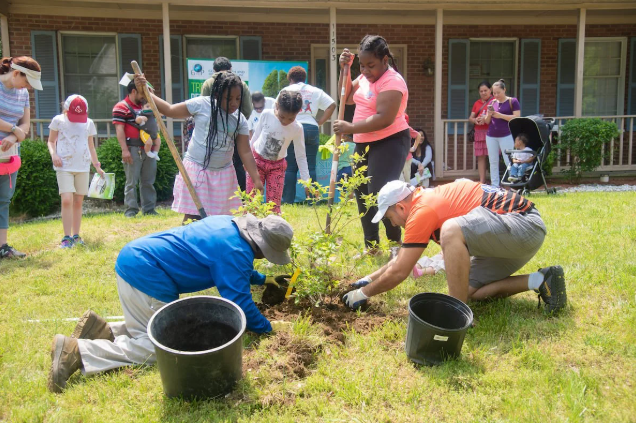
Trees are often seen as very self-sufficient and low-maintenance. This is, for the most part, true; however, newly planted trees often require some care to ensure that they get properly adjusted to their new environment and grow healthily. Studies have shown that the years of a tree’s establishment, which describes the first five years of the tree’s life, are accompanied by the highest mortality rates. Following these steps will reduce the chances of mortality, ensuring that you have a healthy, happy tree!
Water your tree!
While adult trees do not need to be consistently watered, young trees need to be given a consistent supply of water. Young trees should be watered every day for 2 weeks after planting. To water your tree, use a garden hose or a pitcher to water the soil around the tree, careful to avoid wetting the trunk, as this could promote fungus growth. While daily watering is recommended, if the ground around your tree is already moist, do not water it. Following the initial daily watering for 2 weeks, water your tree 2-3 times a week, and eventually once a week.
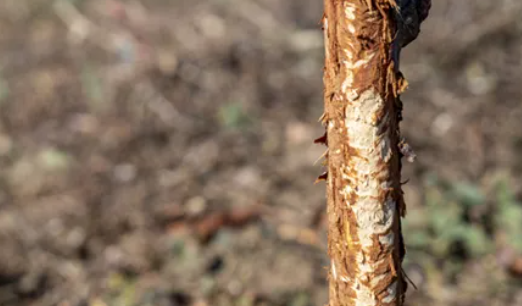
Protect your tree from wildlife.
If you notice damage on your tree similar to the image on the left, it is likely that rabbits or squirrels are likely using your tree bark as a snack. This is extremely harmful to the young tree, as it can stop sap from properly circulating the tree and expose the trunk to fungus, sometimes resulting in the death of the tree. To prevent this, consider purchasing a mesh tree guard to keep small animals away until your tree has grown thick enough bark to defend itself.
Should I prune my new tree?
You do not want to prune your new tree immediately. If the tree has damaged branches or intersecting branches, feel free to prune those. However, refrain from any cosmetic pruning as you do not want to slow tree growth or root development during its formative years. The establishment years of your tree should consist of nurturing your tree and providing the water and resources it needs to grow. Once your tree begins to grow and mature, cosmetic pruning will be more appropriate.
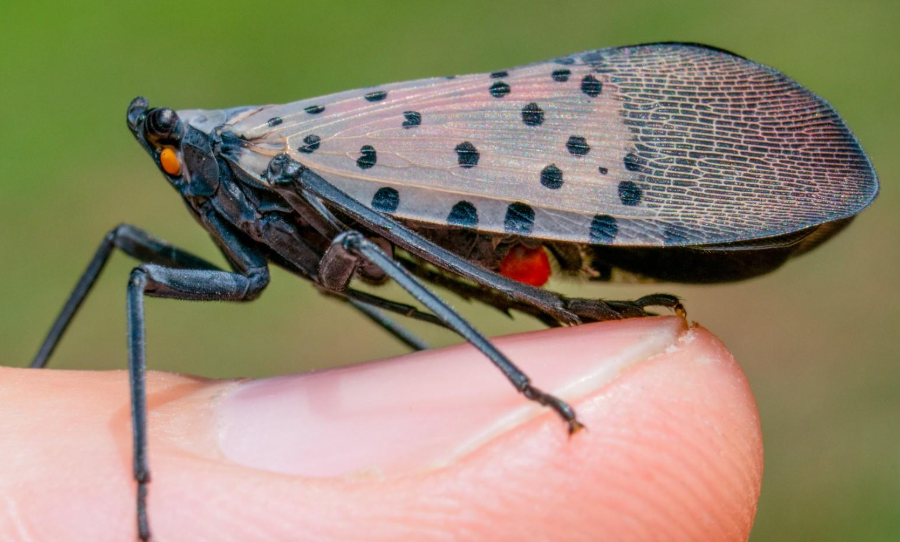
Look out for the spotted lanternfly! The spotted lanternfly, as shown to the left, is an invasive species that has been prevalent on the east coast for the past couple of years. While the spotted lanternflies are not known for killing trees, they can cause some damage. While feeding on a tree’s sap, spotted lanternflies discharge a sugary substance onto the tree that can cause mold to grow. This is not a significant concern if there are a few lanternflies and does not warrant pesticide use, but keep an eye out for lanternflies around your tree.
As you care for your new tree, we hope you see beautiful growth and integration into your yard! If you have any questions or concerns regarding the health of your tree, please reach out to us at [email protected]
Sources:
- https://www.sciencedirect.com/science/article/abs/pii/S1618866721002727
- https://richardstreeservice.com/about/resources/watering-trees-dos-and-donts.php
- https://blog.davey.com/how-to-protect-repair-trees-from-animals-deer-rabbits-squirrels/
- https://extension.umd.edu/resource/pruning-trees-home-landscape/
- https://extension.umd.edu/resource/spotted-lanternfly-home-gardens/